
Camera review
TP-Link Tapo C120 review: is it right for a local NVR?
A research-based Tapo C120 review for local NVR buyers: 2K video, IP66, microSD, Wi-Fi-only networking, RTSP/ONVIF setup, and realistic trade-offs.
Compatibility is model- and firmware-specific. OmniNVR and TardisLabs are not affiliated with or endorsed by TP-Link Tapo.
Purchase verdict
Choose Tapo C120 when budget, 2K detail, local microSD, and documented local protocol support matter more than a wired data connection. It is one of the more practical low-cost cameras to evaluate with OmniNVR, but a Wi-Fi camera should be assessed as a network project: a clean signal and stable stream matter more than the price label.
This is a research-based buying assessment, not a lab test performed by OmniNVR. It separates current manufacturer documentation from the linked reviewer coverage, then treats a successful live stream and recorded timeline on the buyer's own network as the final compatibility test.
What the current product documentation establishes
TP-Link lists a 4 MP / 2K QHD sensor, H.264 video, up to 512 GB microSD support, colour and infrared night options, IP66 weather protection, and RTSP/ONVIF support. The same documentation notes that C120 has no Ethernet port, so it connects by Wi-Fi and uses separate DC power rather than PoE.
Specifications describe the product family and available options; they do not prove that a particular firmware, regional SKU, network, or third-party recorder will behave identically. Confirm the full model code before ordering and retain the current manual with the camera inventory.
What published reviews are useful for
Tom's Guide tested the C120 as a low-cost 2K camera and highlighted local continuous recording, onboard intelligent alerts, daytime detail, and colour night viewing while flagging audio as a weaker area. That maps well to an NVR decision: use third-party coverage to understand framing and audio expectations, then verify the local stream itself.
Independent reviews and creator videos are useful for seeing installation scale, noise, night scenes, app flow, and framing trade-offs that a specification table cannot convey. They can include affiliate links, receive pre-release units, or cover a prior firmware, so they are context rather than a substitute for the official documentation.
Local NVR and OmniNVR fit
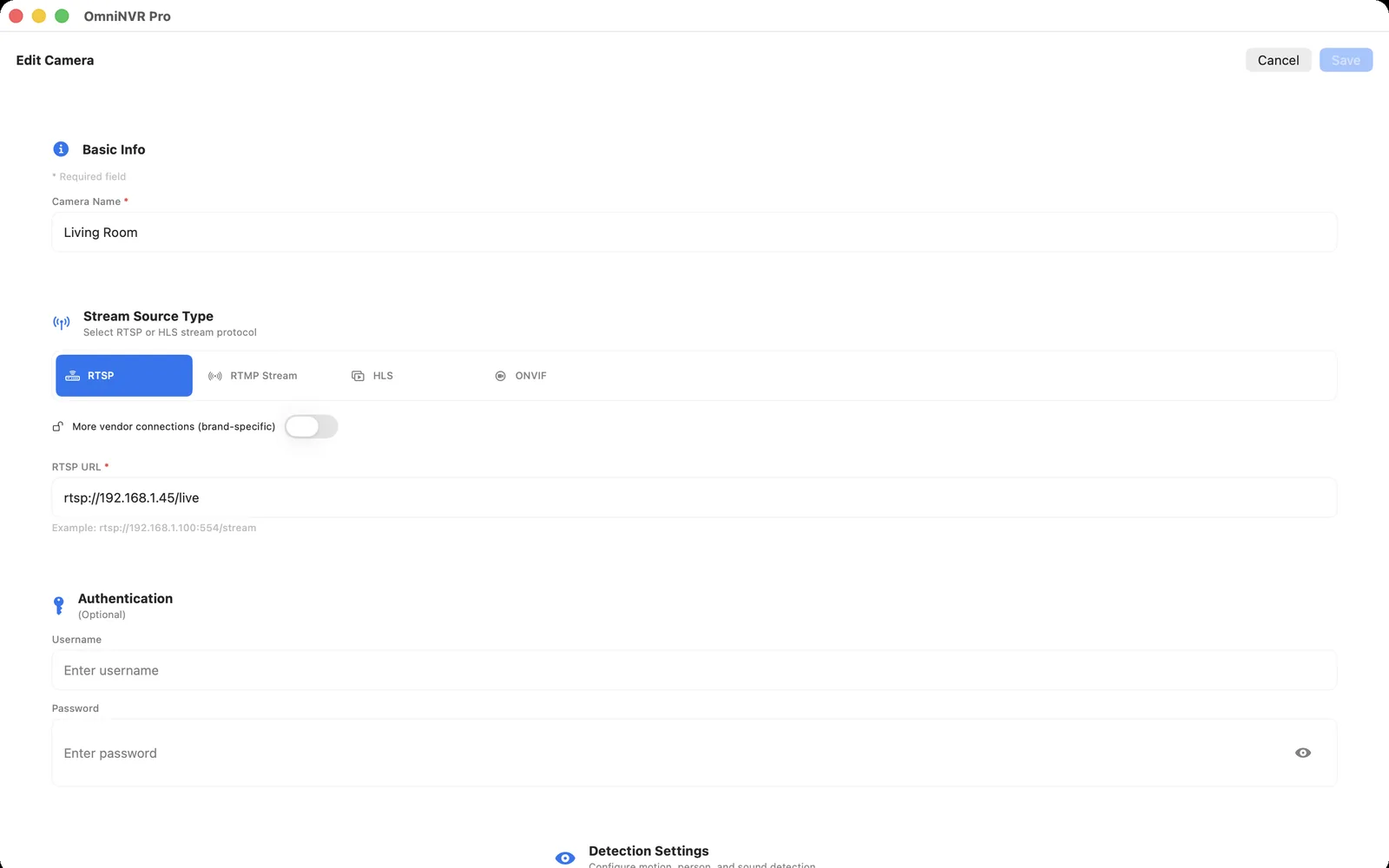
Complete the current Tapo app setup, use a unique camera account, enable the documented third-party camera option, and add the local stream through ONVIF or RTSP. Keep the NVR host close enough to receive a stable Wi-Fi stream; a strong phone signal at the mounting point is not proof of sustained camera performance.
Recommended for a direct OmniNVR evaluation. Test stream limits and concurrent local recording on the exact firmware, because app, microSD, RTSP, ONVIF, NAS, and NVR behaviours can be model- and configuration-specific.
Before mounting permanently, use a dedicated camera account, test the intended main and sub stream for several minutes, make a short recording, review the timeline, and restart the recorder. Do not put camera web, RTSP, or ONVIF services directly on the public internet.
Who should choose it—and who should not
It is a smart value choice for short Wi-Fi runs and moderate camera counts. Prefer PoE when cable installation is possible, the site has unreliable wireless coverage, or missed video carries high consequence. Its compact size does not remove the need for weather-protected cable and power management.
Use the purchase checklist below to turn the review into an installation decision rather than a brand-level assumption.
- Verify 2.4 GHz Wi-Fi signal and packet stability at the final mount.
- Enable RTSP/ONVIF with a dedicated account instead of sharing the cloud-app password.
- Test simultaneous app view, NVR preview, recording, and microSD behaviour.
- Check night framing with nearby lights, reflections, and the camera's spotlight mode.
Frequently asked questions
Does Tapo C120 support RTSP and ONVIF?
TP-Link's current documentation lists both for C120. Enable the documented setting and verify the current local stream on the exact firmware.
Is Tapo C120 PoE?
No. It is Wi-Fi for data and uses DC power; it does not have an Ethernet port.
Can I record C120 to both microSD and an NVR?
Test the actual firmware and stream limit before relying on that combination. A local microSD slot does not by itself guarantee every simultaneous third-party workflow.
Sources and further reading
Record locally on the Apple device that fits the job.
Mac, iPhone, iPad, and Apple TV all support local recording. Recording modes and storage options can differ by platform and app version.